Shuffle Mechanics and Cut Card Positioning: Their Role in Blackjack Penetration Rates
Frankie Hansen · Aug 2, 2026

Shuffle Mechanics and Cut Card Positioning: Their Role in Blackjack Penetration Rates
Blackjack penetration rates depend heavily on how dealers execute shuffles and where they place the cut card in multi-deck shoes, and these factors determine how many cards players actually see before a reshuffle occurs. Research from gaming laboratories shows that standard procedures in most casinos limit penetration to between 65 and 80 percent of the shoe, yet small variations in shuffle routines or cut card depth can shift that figure by several percentage points and alter the overall house edge calculations accordingly.
Core Elements of Shuffle Dynamics
Modern casinos rely on automated shuffle machines or hand-shuffled procedures that break the deck into multiple piles before reassembling them, and each method affects how thoroughly cards randomize while also influencing how far dealers can deal before hitting the cut card. Hand shuffling typically involves two to four riffle shuffles followed by a strip shuffle, whereas automatic machines perform a series of interleaves that achieve similar randomization in under 60 seconds. Observers note that when casinos switch from hand shuffles to machines the average penetration rate often increases slightly because machines produce more consistent pile depths and reduce human error in cut card placement.
Data compiled through August 2026 across North American properties indicates that shoes with six or eight decks maintain penetration around 75 percent when operators follow standard machine protocols, but that figure drops when dealers add extra riffles to address suspected tracking. Those adjustments extend the time between shuffles and reduce the number of hands dealt per hour, which in turn changes the expected value calculations for players who track remaining card composition.
Cut Card Placement Mechanics
The cut card serves as the physical marker that signals when the shoe ends, and its insertion point directly controls penetration depth because dealers stop dealing once it appears. In most procedures the cut card sits between one and two decks from the bottom of an eight-deck shoe, yet casinos adjust this distance based on game speed targets and security concerns. When the cut card moves closer to the bottom, penetration rises and more cards enter play before reshuffling begins, which benefits card counters who rely on deeper information about remaining deck composition.
Studies conducted by the International Gaming Institute at the University of Nevada, Las Vegas have measured how a single deck shift in cut card position alters penetration by roughly 12.5 percent in an eight-deck game, and those measurements appear in operational reports used by table games managers to balance speed against risk. Dealers receive training to insert the card at a consistent depth measured in finger widths or marked guides on the shoe, yet variations still occur during high-volume periods when fatigue or distractions affect precision.
Combined Effects on Penetration Rates
Shuffle frequency and cut card depth interact in ways that compound or offset each other, and casinos monitor both variables together to maintain target penetration levels across shifts. A deeper cut card combined with fewer riffles during the shuffle can push penetration past 80 percent, while a shallower cut paired with extra randomization keeps the rate closer to 70 percent. Table games supervisors track these metrics through daily reports that log hands dealt per shoe, and adjustments follow when average penetration deviates from established benchmarks.
One property in the American Midwest adjusted its shuffle machine settings in early 2025 and observed a measurable rise in penetration after reducing the number of automated passes from seven to five, while simultaneously moving the cut card insertion point one deck deeper. The change increased hands per hour without requiring additional staffing, yet it also prompted closer scrutiny of player behavior because deeper penetration amplifies the value of any advantage play techniques present at the table.
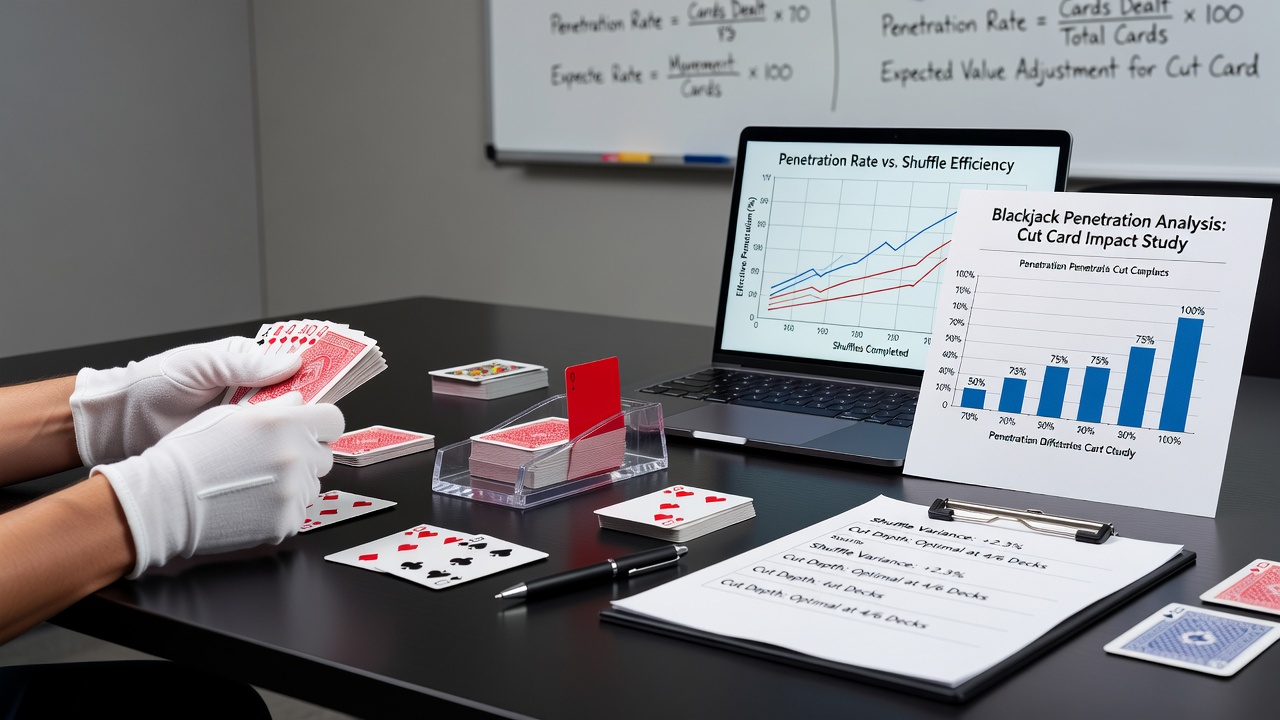
Regulatory oversight from bodies such as the Nevada Gaming Control Board requires operators to document shuffle procedures and cut card policies as part of internal control submissions, and these records allow auditors to verify that penetration stays within approved ranges. Similar documentation appears in reports filed with gaming authorities in other jurisdictions, ensuring consistency across properties that share the same game rules but operate under different regional standards.
Operational Adjustments and Monitoring
Casino managers review penetration data weekly and compare it against historical averages to detect procedural drift, and they issue corrective training when individual dealers consistently place the cut card outside target zones. Automated systems now log every shoe start and end time along with the exact number of cards dealt, which produces precise penetration percentages that replace earlier manual estimates. These systems also flag shoes that end significantly earlier or later than expected, prompting immediate supervisor review of the shuffle and cut process.
Training programs emphasize that consistent cut card placement protects game integrity while still allowing reasonable penetration for player engagement, and dealers practice insertion techniques on practice shoes until they achieve accuracy within half a deck. Properties that maintain tighter tolerances report more stable hourly hand counts and fewer disputes over when a shoe should end, which improves both operational efficiency and regulatory compliance records.
Conclusion
Shuffle dynamics and cut card placement together determine blackjack penetration rates through measurable mechanical and procedural steps that casinos track with increasing precision. Data from multiple jurisdictions shows that small, controlled adjustments to either factor produce predictable shifts in the percentage of the shoe that enters play, and operators balance these changes against speed, security, and compliance requirements. Continued refinement of shuffle machines and electronic monitoring tools supports consistent penetration outcomes across shifts and properties while meeting the documentation standards set by gaming authorities.